


When Is Pelvic Lymph Node Dissection Performed in Prostate Cancer?

Pelvic lymph node dissection (PLND) removes selected nodes in the pelvis during radical prostatectomy so a pathologist can look for cancer cells. It is not an automatic part of every prostate operation. Its established value is more accurate staging: microscopic spread may be present even when scans look normal. The decision uses the PSA level, biopsy grade, clinical stage, imaging and a validated risk estimate. The possible staging benefit must be weighed against added operating time and complications. A survival benefit from performing PLND in everyone has not been established. 13
What question does PLND answer?
Prostate cancer can spread to regional pelvic nodes. Imaging can show enlarged or metabolically active nodes but cannot reliably exclude small deposits. Examining removed nodes may result in a pN0 report, meaning no cancer was found in the nodes examined, or pN1, meaning at least one regional node was involved. pN0 is not proof that no cancer cells exist anywhere else. A pN1 result informs prognosis and the discussion about follow-up or additional treatment; it does not dictate one identical treatment for every person. The number of involved nodes, other prostatectomy pathology findings and subsequent PSA results all matter. 13
PLND is primarily a staging procedure. Removing involved nodes might also reduce tumour burden in selected people, but the size and consistency of a direct treatment benefit remain uncertain. This is one part of a wider conversation about prostate cancer treatment choices. 13
Who may be offered it?
A clinician estimates the chance of nodal involvement before surgery using a nomogram. Its inputs commonly include PSA, Gleason score or ISUP Grade Group, clinical T stage and sometimes MRI findings. A nomogram gives a probability for people with similar features, not a diagnosis for one patient. Its performance depends on the population and how biopsy and imaging were performed. Guidelines do not make a single percentage threshold appropriate for every patient and setting. 13
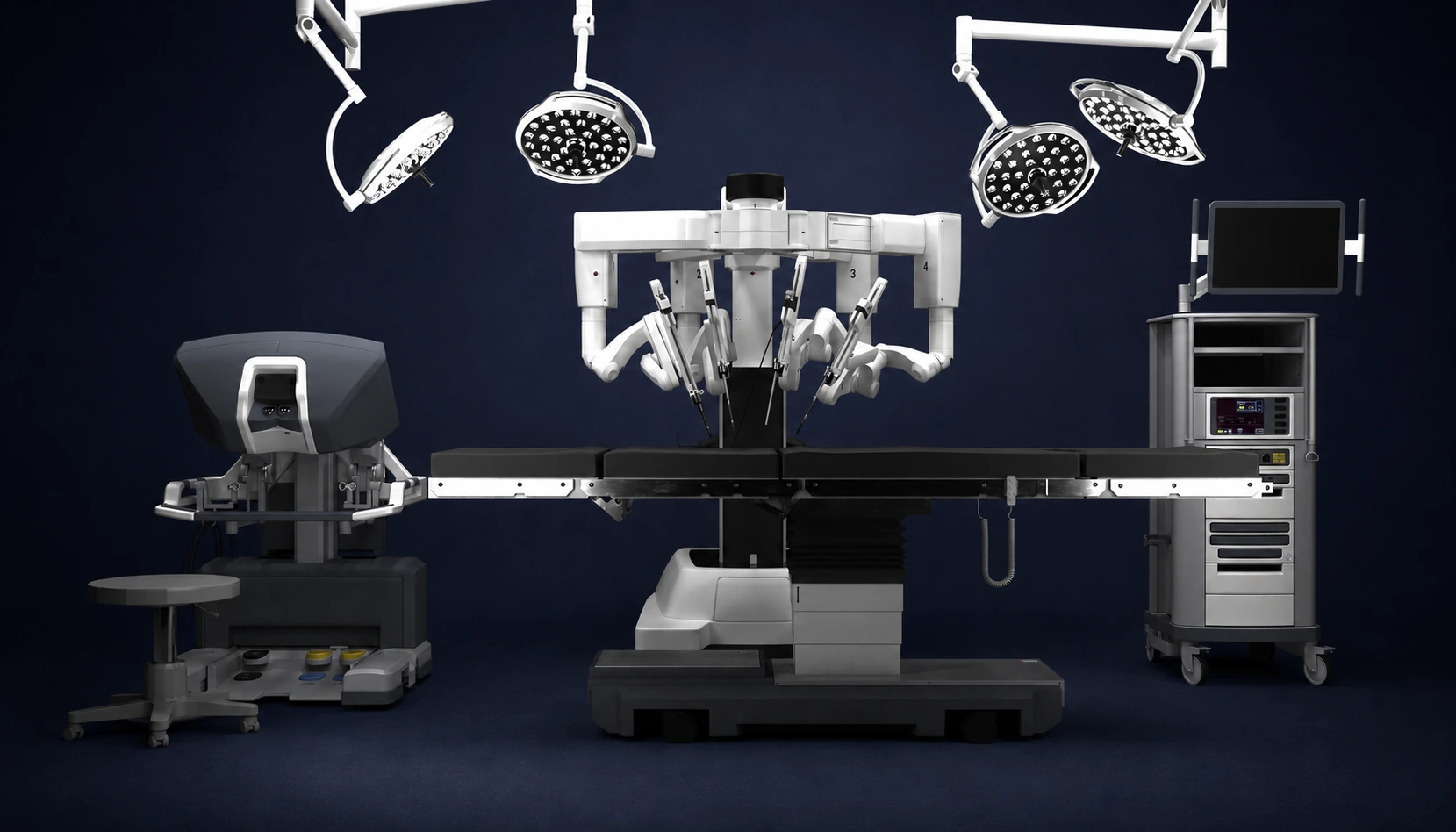
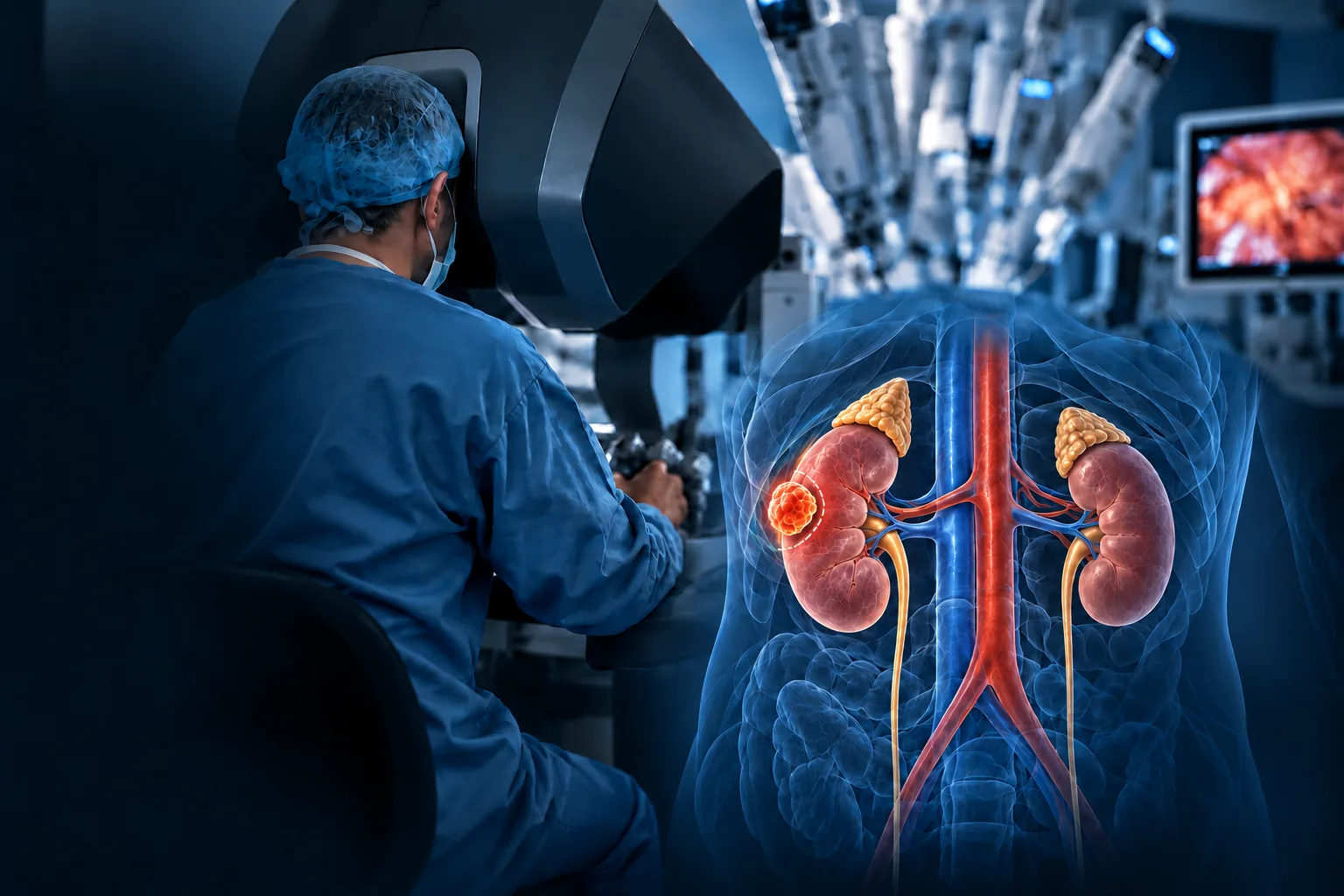
When predicted risk is low, the extra information may be unlikely to justify the surgical burden. As risk rises, accurate pathologic staging becomes more valuable. Health conditions, planned cancer treatment and what a result would change are also relevant. The PLND decision should be made while planning robotic radical prostatectomy, rather than treating node removal as an unplanned extra step. 13
Does a negative PSMA PET make PLND unnecessary?
Not necessarily. PSMA PET can improve detection of visible disease but has limited resolution for microscopic deposits. In a prospective imaging trial, sensitivity for pelvic nodal metastases was about 40% and specificity about 95% among the subgroup who underwent prostatectomy and node dissection. Those estimates describe that study population and tracer; they are not a personal probability. A negative scan cannot rule out microscopic disease in a person with high preoperative risk. A positive finding may change the whole treatment discussion and needs careful review. 14
Limited versus extended dissection
A limited template samples a smaller field. An extended pelvic template includes defined nodal tissue along the external iliac vessels, in the obturator fossa and around the internal iliac vessels. When PLND is chosen, EAU and AUA guidance favours an extended template for more accurate staging. The raw count of nodes removed does not by itself show whether the intended anatomical field was adequately sampled. 13
The research has an important distinction: trials have mainly compared limited with extended PLND, not PLND with no PLND. The initial report of one randomised trial found no significant difference in biochemical recurrence. Its later follow-up again found similar biochemical recurrence but reported fewer metastases with extended PLND. The number of nodes removed in the two groups was unexpectedly close, limiting how confidently the finding can be generalised. These are two reports from the same trial, not two independent trials. They do not establish that every person who undergoes prostatectomy gains a survival benefit from dissection. 56
Risks and the meaning of the pathology result
PLND adds a surgical stage and can increase operating time. Possible problems include bleeding, injury to nearby vessels or nerves, blood clots and a lymphocele: a collection of lymph fluid in the pelvis. Some lymphoceles cause no symptoms; others may cause pain, fever or leg swelling and occasionally need drainage. Risk varies with the dissection field and the patient's health. A robotic approach does not eliminate it. 13
The report should state how many nodes were assessed, how many were involved and the pN stage. Read it alongside the prostate findings, rather than as a stand-alone verdict. PSA monitoring after surgery remains central to decisions about observation or further treatment. If pN1 is found, the number of involved nodes, pathology, PSA and overall treatment plan determine the next discussion. 13
Five questions for your appointment
- What is my estimated risk of nodal involvement, and which model produced it?
- Which anatomical areas would be removed if PLND is performed?
- What does my PSMA PET result tell us, and what can it miss?
- How do my personal risks of lymphocele, clotting and bleeding affect the choice?
- How would pN0 or pN1 change PSA follow-up or the discussion of additional treatment?
What does a nomogram percentage actually mean?
An estimated 7% chance of nodal involvement is a model prediction derived from similar patients, not a diagnosis. A model designed for men diagnosed with MRI-targeted and systematic biopsies included PSA, clinical stage, the index lesion on MRI and biopsy grades. Validation showed the trade-off between sparing unnecessary dissections and missing some positive nodes changes with the chosen cut-off. A 7% threshold used in a study is not a universal surgical rule. Ask which nomogram was used for you and whether it fits your biopsy pathway. 18
What do two independent randomised trials tell us?
In the 300-patient phase 3 trial by Lestingi and colleagues, extended PLND improved pathological staging but did not demonstrate a clear advantage for the primary early biochemical recurrence outcome. An apparent benefit in the ISUP Grade Group 3–5 subgroup was exploratory. Touijer's trial likewise found similar biochemical recurrence in its first report; longer follow-up suggested fewer metastases after extended dissection. Lestingi and Touijer studied separate cohorts, while the two Touijer publications report the same trial at different time points. These findings do not justify a blanket promise of benefit, or the claim that no selected patient could benefit. 567
How can a lymphocele be recognised or prevented?
A pelvic lymph fluid collection may be an incidental scan finding or cause pelvic pain, fever, infection or leg swelling. New one-sided leg swelling also needs assessment for a clot or other causes. In the randomised PELYCAN trial, adding a peritoneal flap reduced symptomatic lymphoceles at six months from 9.1% to 3.7%, with about 11 additional minutes of operating time. That trial assessed a surgical prevention technique; it did not test whether PLND itself was needed. EAU also reports a later large trial in which the same reduction was not shown. A flap decision depends on the operation and the team's approach. 19
Frequently asked questions
Are nodes removed in every prostate cancer operation?
No. Predicted nodal risk and the value of staging are weighed against added surgical risks. 13
Do normal-looking nodes mean there is no spread?
No. CT, MRI and PSMA PET may miss microscopic deposits. 14
Is a negative PSMA PET enough to skip PLND?
Not by itself. Imaging is interpreted together with biopsy findings and clinical risk. 14
Does pN1 mean the operation failed?
No. It establishes regional nodal involvement and helps guide the next plan; prognosis also depends on the other findings and PSA. 13
Is removing more nodes always better?
No. The aim is to sample the appropriate defined field in a suitable patient. Wider surgery can carry more risk. 13
Can a lymphocele occur after robotic surgery?
Yes. Robotic access does not prevent lymph fluid collections after PLND. New pain, fever or leg swelling should be assessed. 13
Does pN0 rule out cancer everywhere?
No. It describes only the regional nodes that were examined. Prostate pathology and PSA follow-up remain relevant. 13
Does pN1 automatically mean hormone treatment starts immediately?
No. The number of positive nodes, other pathology, postoperative PSA and overall health guide the discussion of observation, radiotherapy and systemic treatment. 23
References
-
European Association of Urology. EAU Guidelines on Prostate Cancer: Diagnostic Evaluation [Internet]. Available from: https://uroweb.org/guidelines/prostatecancer/chapter/diagnostic-evaluation
Source details and use in this article
Access checked: 29 October 2026Relevant use: Nodal staging, nomograms, PSMA PET limits, anatomical template and complications.Limit: Guideline advice requires an individual risk assessment. -
European Association of Urology. EAU Guidelines on Prostate Cancer: Treatment [Internet]. Available from: https://uroweb.org/guidelines/prostate-cancer/chapter/treatment
Source details and use in this article
Access checked: 29 October 2026Relevant use: Extended template when dissection is chosen; management after pN1.Limit: Treatment decisions depend on the complete clinical picture. -
AUA/ASTRO. Clinically Localized Prostate Cancer Guideline [Internet]. Available from: https://www.auanet.org/documents/guidelines/pdf/localized%20prostate%20cancer%20website%20042922.pdf
Source details and use in this article
Access checked: 29 October 2026Relevant use: Statements 20–22: staging, nomograms and uncertain survival benefit.Limit: Published in 2022; interpret with current evidence. -
Diagnostic Accuracy of 68Ga-PSMA-11 PET for Pelvic Nodal Metastasis Detection Prior to Radical Prostatectomy and Pelvic Lymph Node Dissection: A Multicenter Prospective Phase 3 Imaging Trial. JAMA Oncol. 2021;7(11):1635-1642. doi:10.1001/jamaoncol.2021.3771 · PubMed · PMC
Source details and use in this article
Relevant use: Prospective imaging accuracy before surgery.Limit: Sensitivity and specificity were measured in the surgical subgroup. -
Touijer KA et al. Limited versus Extended Pelvic Lymph Node Dissection: Randomized Trial [Internet]. Available from: https://pmc.ncbi.nlm.nih.gov/articles/PMC8407534/
Source details and use in this article
Relevant use: Initial biochemical recurrence comparison.Limit: Same trial cohort as source 6; node yields were unexpectedly similar. -
Touijer KA et al. Update from a Randomized Trial of Limited versus Extended Dissection [Internet]. Available from: https://pubmed.ncbi.nlm.nih.gov/39472200/
Source details and use in this article
Relevant use: Longer follow-up and metastasis outcome.Limit: Follow-up of source 5, not independent evidence. -
Lestingi JFP et al. Extended Versus Limited PLND: Randomized Phase 3 Trial [Internet]. Available from: https://pubmed.ncbi.nlm.nih.gov/33293077/
Source details and use in this article
Relevant use: Independent randomised trial and exploratory subgroup.Limit: Single centre; subgroup result is hypothesis-generating. -
Gandaglia G et al. Nomogram for MRI-targeted and Systematic Biopsies [Internet]. Available from: https://pubmed.ncbi.nlm.nih.gov/30342844/
Source details and use in this article
Relevant use: Inputs and limits of a nodal invasion risk model.Limit: Study threshold is not a universal clinical cut-off. -
Neuberger M et al. PELYCAN Randomised Trial of Peritoneal Flaps [Internet]. Available from: https://pubmed.ncbi.nlm.nih.gov/37543465/
Source details and use in this article
Relevant use: Lymphocele prevention after robotic prostatectomy with PLND.Limit: Tests a prevention technique, not PLND indication; subsequent trial differed.
Keep reading:
Related patient guides
What Is PSMA PET and When Is It Used in Prostate Cancer?
PSMA PET/CT decisions depend on PSA, cancer risk and previous treatment; a negative scan does not exclude tiny deposits.
What Are the Gleason Score and ISUP Grade Group?
Gleason and ISUP grades describe tumour architecture; stage and treatment choices require the whole clinical picture.
How to Understand Your Pathology Report After Prostatectomy
Understand grade group, pathological stage, surgical margins and lymph node findings after radical prostatectomy.